
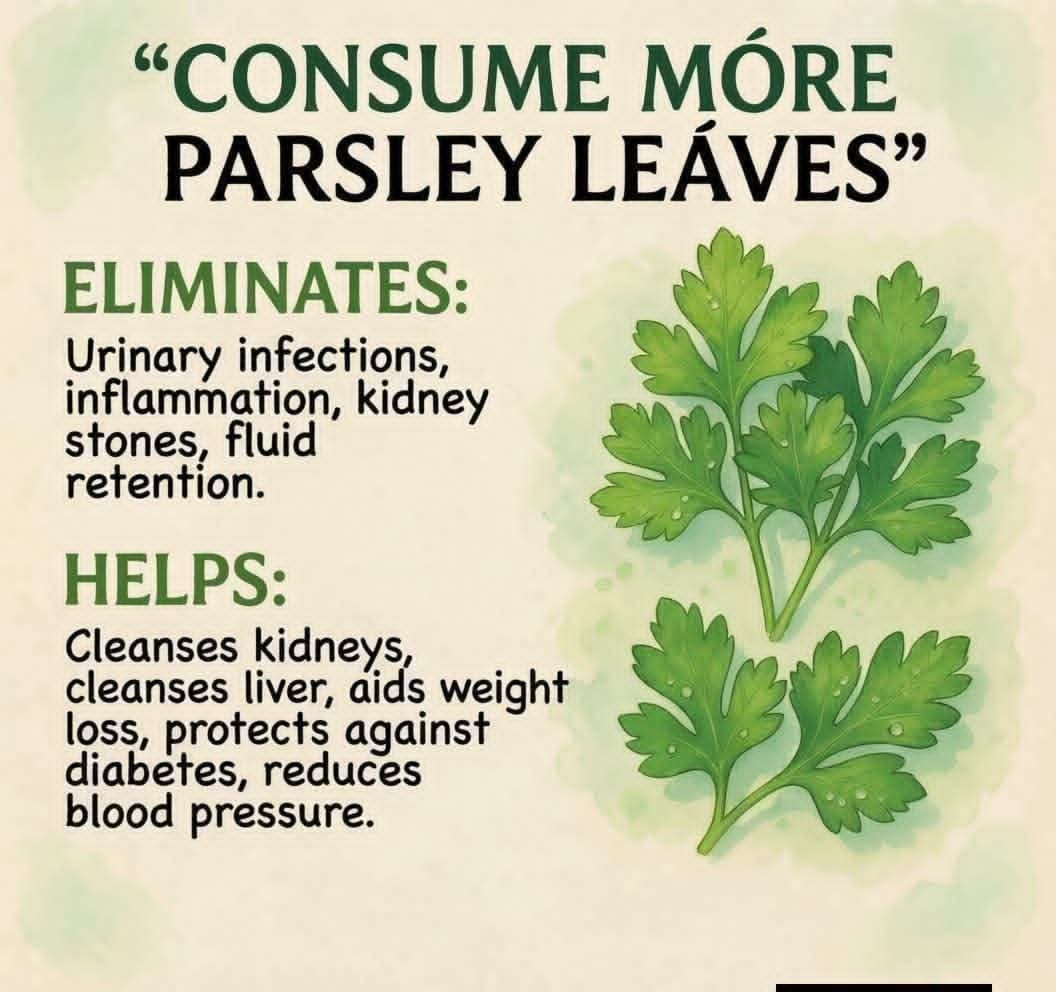
🌿🥗 CONSUME MORE PARSLEY: A Powerhouse of Nutrition
Parsley, often dismissed as nothing more than a garnish, is actually a nutrition powerhouse packed with numerous health benefits. This small yet mighty herb is not only rich in flavor but also loaded with essential vitamins, antioxidants, and health-promoting properties. In this article, we will explore the many benefits of parsley and how you can easily incorporate this versatile herb into your daily diet.
The Nutritional Profile of Parsley
Rich in Vitamin C
One of the standout features of parsley is its high vitamin C content. Just a small serving (about one-quarter cup of fresh parsley) provides more than the daily recommended intake of this essential vitamin. Vitamin C is crucial for:
– Boosting the Immune System: It helps in stimulating the production of white blood cells, which are critical for defending the body against infections and diseases.
– Antioxidant Protection: Vitamin C is a powerful antioxidant that protects your cells from damage by free radicals, contributing to overall health and longevity.
Packed with Antioxidants
Parsley is also rich in other antioxidants, such as flavonoids and carotenoids. These compounds play a significant role in protecting the body from oxidative stress, which can lead to chronic diseases like cancer, heart disease, and diabetes. The antioxidants in parsley work together to:
– Reduce Inflammation: Chronic inflammation is linked to several health issues, including arthritis and heart disease. The anti-inflammatory properties of parsley can be beneficial in managing these conditions.
– Support Skin Health: Antioxidants help reduce the signs of aging, promote skin repair, and can even offer some protection against sun damage.
Natural Diuretic Effect
Another reason to incorporate more parsley into your diet is its natural diuretic properties. These properties can help:
– Promote Urinary Health: Parsley can encourage the elimination of excess fluids and waste from the body, which is beneficial for kidney health.
– Reduce Bloating: If you’re feeling puffy or bloated, adding parsley to your meals can help combat this discomfort.
Health Benefits of Parsley
Supports Immune Function
As mentioned, the high vitamin C content of parsley helps strengthen the immune system. Moreover, the herb features other immune-boosting properties that can help your body ward off common illnesses such as colds and flu. Regular consumption of parsley can enhance your overall immunity and resilience to infections.
Blood Pressure Management
In addition to being a flavorful herb, parsley can also help manage blood pressure levels. Studies suggest that the potassium content in parsley supports heart health by promoting normal blood circulation and reducing the strain on the cardiovascular system. Elevated potassium levels can lead to:
– Decreased Blood Pressure: A diet rich in potassium can help lower blood pressure levels, reducing the risk of cardiovascular disease.
– Heart Health: By maintaining healthy blood pressure levels, parsley may contribute to better overall heart health.
Bone Health Benefits
Surprisingly, parsley is also a great source of vitamin K, which plays a vital role in maintaining bone health. Vitamin K is essential for:
– Bone Mineralization: This vitamin helps maintain bone density, reducing the risk of fractures and osteoporosis, especially in older adults.
– Calcium Absorption: Vitamin K facilitates the proper utilization of calcium in the bones.
How to Incorporate Parsley into Your Diet
Integrating parsley into your meals is simple and enjoyable. Here are some easy ways to consume more parsley:
Fresh Parsley Salad
Mix chopped fresh parsley with your favorite salad ingredients. A simple lemon vinaigrette can enhance the flavor while keeping it healthy.
Parsley Smoothie
Add fresh parsley to your morning smoothie for an extra nutrient boost. Combine it with fruits like banana and spinach to mask the taste while reaping the benefits.
Parsley in Soups and Stews
Use parsley as a seasoning in your soups and stews. It adds freshness and flavor to a variety of dishes.
Garnish with Parsley
Don’t underestimate the power of garnish. Use freshly chopped parsley to top off your meals, enhancing both the look and nutritional value of your dishes.
Conclusion
In conclusion, parsley may be small, but its health benefits are significant. By incorporating this herb into your daily meals, you can enjoy its rich vitamin C content, antioxidant properties, and other health benefits that support your overall well-being. From improving immunity to aiding in blood pressure control, parsley is a simple yet powerful addition to your diet. Whether you choose to add it to salads, smoothies, or stews, there are countless ways to enjoy this nutritious herb. So, make it a habit to consume more parsley and experience the health benefits it offers!
Don’t forget to check the first comment for a delicious recipe that highlights the versatility of parsley!